Tag

mi vida en lituania

MEDTROTTERS

Meet a new religion: Romuva

In September 2010, when I was 19 years old I moved to Lithuania. After spending 6 years on that country (I don’t live there anymore) I still get surprised about the things that I keep on discovering about the culture and folklore of the so-considered the Baltic’s Jewel.

As a self-proclaimed agnostic person (baptised and «first-communioned» as a Christian Catholic) I have always found that my religion or what was told to me was not enough. It didn’t fulfil me. Thus, I started looking elsewhere. Also, the fact that I’m a very curious and «asky» person, made me research more and more about the «not pagan» religions, but lately, I’ve been learning more about the pagan ones. But, is it Paganism the term we want to use? Is it properly used? Or may it be considered somehow disrespectful.

If we check it up on wikipedia it tells that «Paganism is a term that first arose among the Christian community of southern Europe during late antiquity as a descriptor of religions other than their own, or the related Abrahamic religions; e.g., Judaism and Islam». Well, don’t really know how to refer to them Let’s just call them «not Abrahamic related religions». 

Romuva is a religion that was found in the Baltic area before their Christianization in 1387. It is a polytheist cult which asserts the sanctity of nature and has elements of ancestor worship (planning to write another post about the Romuvan Deities in the next future). A lot of their traditions are still practiced and in fact, in the nowadays Lithuanian life some references to those deities are still used. 

Did you know that actually, Lithuania was the last country in Europe to officially become Christian – a change which took place mainly for political reasons, and which was not completed until the beginning of the 15th century? 

This type of post is a totally new one for me. I have never written about these type of things. Yes, it’s true, I have written about Lithuanian culture many times but never like this. I am getting very excited about this new path. I think that Lithuanian and Baltic culture deserve more «fame» around the world, since Lithuania was once the biggest country in Europe and its language is the oldest one in our continent.


MEDTROTTERS

24 hours in Kaunas

15449554190_20d7f86b6a_k

On July the 2nd 2016 (basically 5 months ago) I left the city where I’d lived for 6 years. Kaunas (the second biggest city in Lithuania) became my second (or even first) home and will always be in my heart. I’m not trying to get cheese here! It’s just that I loved it over there. 

If I could get back there right now and spend 24 hours, while still it’s Autumn and the first snow is down, this is what I would do.

El 2 de Julio del 2016 (vamos, hace 5 meses) me fui de la ciudad donde viví durante 6 años. Kaunas (la segunda ciudad más grande de Lituania) se convirtió en mi segunda (o incluso primera) casa y siempre tendrá un sitio en mi corazón. No me estoy poniendo moñas! Es que realmente me gustaba vivir allí.

Si pudiera volver allí ahora mismo y pasar 24 horas, cuando aún es Otoño y las primeras nieves ya han caído, esto es lo que haría.

000004

First things first, wake up early (the early bird gets the worm) have a morning run through my favourite spot in town, Ąžuolynas, get back to the hotel (let’s imagine I’m staying close to the main street, Laisvės Alėja) have a shower and then head to the place where you can really and truly enjoy an awesome morning coffee and breakfast, Green CaféI used to go there almost on a daily basis and the service and goods they have over there… well, mindblowing. Oh, obviously I wouldn’t be having breakfast alone, I would call over my friend Šarūnas who I miss very much (bromance and these things, y’all know…) and catch up. Approx time, 2 hours.

Lo primero de todo, me levantaría temprano (a quien madruga Dios le ayuda) hacer una carrera matutina en mi sitio preferido, Ąžuolynas, volver al hotel (imaginemos que me estoy alojando cerca de la calle principal, Laisvės Alėjapegarme una ducha rápida e ir al sitio donde realmente puedes desayunar en condiciones, con un café excelente, Green CaféSolía ir allí casi cada día y el servicio y comida que tienen… bueno, increíble. Oh, y evidentemente no desayunaría solo, llamaría a mi amigo Šarūnas a quien realmente echo de menos (ya sabéis, bromance y esas cosicas…) y ponernos al día. Tiempo aproximado, 2 horas.

After having our stomachs full and the energy level to the maximum, we would probably head to the old town. Carrying our analogue cameras, we would start asking people to take their potraits and shooting various things that would attract our eyes. Probably you didn’t know it but Kaunas has the longest pedestrian street in Eastern Europe! I have walked it more than 103 times and it connects the city centre with the heart of the old town.

Después de rellenar nuestros estómagos al máximo y cargar las baterías, seguramente iríamos hacia el casco antiguo. Con nuestras cámaras analógicas en mano, seguramente pararíamos a los viandantes para pedirles retratos y haríamos fotos de las cosas que nos llamasen la atención. Seguramente no lo sabías, pero Kaunas tiene la calle peatonal más larga del Este de Europa! La he caminado más de 103 veces y conecta el centro de la ciudad con el corazón de la zona vieja.

21540009

To have a rest after a morning walking, exploring all the corners and hidden places of the millenary city (legends say it was created in 1030) the best idea is to find refuge in a warm and cozy restaurant. As my sister is still living (and studying) over there, we would get to our favourite restaurant, MokshaOkay… okay! Give me a break! I know it’s not a typical Lithuanian food restaurant, in fact, it’s a pretty legit Indian food restaurant owned by an Indian man (mega friendly and fun). It’s like a «well-known-secret-place» minimal and exclusive! You better hurry up or book a table if you don’t want to be left outside!
Para descansar después de toda la mañana explorando todos los rincones y sitios secretos de la ciudad milenaria (la leyenda cuenta que la ciudad se creó en el 1030) la mejor idea es encontrar refugio en un restaurante cómodo y cálido. Como mi hermana aún vive (y estudia) allí, iríamos a nuestro restaurante preferido, MokshaVale… vale! Dadme un respiro! Ya se que no es un restaurante de comida típica lituana, de hecho, es un muy buen restaurante Indio cuyo dueño es un hombre hindú (super simpático y divertido). Es como «un sitio secreto a voces» minimalista y exclusivo! Si quieres ir, date prisa o reserva una mesa si no quieres quedarte fuera!


One of my top favourite plans to do in Kaunas (in the evenings) is go to this very old cinema, Romuva (in fact the first cinema ever built in the city) where they do screenings of more «indie» movies. A cool tip to enjoy your movie experience to the maximum is to grab a cup of coffee or tea in the cafeteria across the road and bring it in the cinema. There I would always dream to see any of my youtube short movies screened. I guess it’s something I still have on my bucket list and I definitely should cross it off.

Uno de mis planes preferidos para hacer una tarde en Kaunas es ir a un cine muy antiguo, Romuva (de hecho fue el primer cine construido en la ciduad) donde ponen películas más «alternativas». Un truco para mejorar tu experiencia cinematográfica es comprarte un café o un té en la cafeteria que hay al otro lado de la calle y entrarlo al cine. Siempre solía soñar que algún día vería uno de mis pequeños documentales que están en youtubeEs algo que aún tengo en mi lista de cosas por hacer y que debería tacharla.

21540012

We arrive to the end of the day. Or better said, to the beginning of the night. Let’s go back to the old town. Or actually, better said, since we are in the centre, there’s a pub I love going to. A very locals-love-it place. It’s called Kavinė KultūraI loved going there with ŠarūnasWe would always order «Weissbiers» (preferably Lithuanian ones) and depending how hungry we were some Kepta duona su sūriu would come alongside it.

Hours and hours spent by and a possibility of heading to another of my favourite bars (or caves, as I like to call them) in Kaunas (B.O.or even just staying in the same bar having a super interesting and deep conversation would lead us to closing time.

Llegamos al final del día. O mejor dicho, al principio de la noche. Volvamos a la zona vieja. O mejor dicho, ya que estamos en el centro hay un pub al que me encanta ir. Un stio amado y venerado por los locales. Se llama Kavinė KultūraLa verdad es que me encantaba ir ahí con ŠarūnasSiempre nos pedíamos nuestras «Weissbiers» (preferiblemente lituanas) y dependiendo de cómo de hambrientos estuviésemos pedíamos Kepta duona su sūriu para acompañarlo.

Horas y horas pasarían y la posibilidad de ir a otro de mis bares (o cuevas, como a mí me gusta llamarlos) preferidos en Kaunas (B.O.o incluso quedarnos en el mismo bar teniendo una conversación super interesante y profunda nos llevaría a la hora de cerrar.


And even though this was part of a competition organised by AccorHotels, I would definitely do this if I could get 24 hours to visit my second home again. 🙂

Y aunque todo esto forma parte de una competición organizada por AccorHotels, definitivamente haría esto si pudiera pasar 24 horas visitando mi segundo hogar 🙂


DIARIO DE UN MIR

Pau Mateo, MD.


Estimado señor Pau Mateo, sentimos informarle que no ha sido aceptado en la «inserta aquí nombre de cualquier facultad de medicina de España de cualquier universidad pública» y por lo tanto pasa usted a la lista de espera. – Julio del 2009.

Ese fue el primer batacazo que me llevé con Medicina. Ese mismo año, en Septiembre del 2009 empecé a estudiar Fisioterapia en la Universidad Católica de Valencia y me dije a mí mismo «bueno, esto no está tan mal, seguramente me acabe gustando».

Dear Pau Mateo, we are sorry to inform you that you haven’t been accepted in «insert here any name of any faculty of Medicine of any public university in Spain» and that’s why you are now on the waiting list. July 2009.

That was the first slap that Medicine gave me. That same year, on September 2009 I started studying Physiotherapy in the Catholic University of Valencia and I told to myself «well, this isn’t that bad, I’m sure I’ll end up liking it»

(Junio 2009, primer año de Fisioterapia)

Yo veía a mis compañeros de clase y los veía apasionados con la Fisioterapia, sin embargo a mí no me acababa de convencer. Fue a través de asistir a quirófano con un Neurocirujano que nos dejó ver sus operaciones cuando realmente me volví a dar cuenta de que lo que yo quería hacer era Medicina.

Con la ayuda de mis padres encontramos una universidad en Lituania que ofrecía un programa para cursar los estudios de medicina en inglés y que después con el título podíamos ejercer en cualquier parte de Europa.

No dudé ni 5 minutos en decidir que me iba, sí o sí. Quería ser médico y lo iba a ser a toda costa. 

I saw my classmates and they were totally passionate about Physiotherapy, but I didn’t really like it. It was after I went to a surgery room with a Neurosurgeon when something really clicked inside of me and I finally realised again that what I wanted to do was Medicine. 

With the help of my parents we found a university in Lithuania that offered an english programme to study medicine and that afterwards with that diploma you could work anywhere in Europe.

It didn’t even take me 5 minutes to make up my mind and decide that yes or yes I was going there. I wanted to be a doctor no matter what.

(Octubre 2010, primer año de Medicina)

Pero te voy a ser sincero, no ha sido fácil en absoluto. Además del hecho de que tenía 19 años cuando me fuí de España y que nunca había vivido ni pasado una temporada en un país con un habla diferente al español, estudiar medicina en inglés al principio me costó bastante. Traducía prácticamente todos los apuntes hasta que poco a poco me fuí acostumbrando y hasta llegar al punto de poder hablar inglés perfectamente y sin ningún problema.

También la universidad endureció mucho el sistema lectivo, es decir, llegamos a un punto donde tienes que aprobar todas las asignaturas por año, si no, repites año aunque sea con una asignatura de 1 crédito.

But I’m going to be sincere, it hasn’t been easy at all. Apart from the fact that I was 19 years old when I left Spain and that I had never lived before in a place with a different language than Spanish, studying medicine at the very beginning in english was quite hard. I used to translate all my notes but then, slowly I got used to the language until reaching the point of being able to speak english without any problems.

Also the university got more strict, which meant that if we didn’t pass all the subjects from each year, we had to retake the whole year with only one subject, even if this only consists of 1 credit.

(Octubre 2011, segundo año de Medicina)

Pero no todo ha sido estudiar y estudiar. Además de salir de fiesta y jugar algún torneo de fútbol y baloncesto (bueno, y además de empezar a escribir este blog en mi primer año de carrera) también pertenecí al KIMSU (Kaunas International Medical Students Union) durante 5 años ayudando y organizando talleres para los estudiantes y además siendo durante 4 años mentor de los estudiantes de primero, siendo su «veterano»  y aconsejándoles como estudiar las asignaturas o cómo encontrar los edificios entre muchas otras cosas.

But not all has been studying and more studying. Apart from partying, playing in some tournaments of football and basketball (well, and also writing this blog that I started on my very first year of medicine) I was also part of KIMSU (Kaunas International Medical Students Union) for 5 years helping and organising workshops for the students and also I’ve been for 4 years mentor of the first year students, being their «senior student» and helping them with their studies or finding their way around the city among many other things.

(Junio 2013, tercer año de Medicina)

Los tres primeros años fueron cuesta arriba. Los años preclínicos. Dicen que una vez que acabas tercero acabas medicina 100% seguro. Bueno, yo he visto gente que no consigue pasar de tercero y gente que deja la carrera en 5º.

Pero yo me vine aquí con un sueño y una misión, convertirme en médico. Así que podía tener asignaturas difíciles, podía perder amigos, podía estar más o menos solo o muy acompañado, nada me distraía de mi última meta: ser médico.

The first three years were the the hardest ones. The preclinical years. They say once you finish third year you’ll become a doctor 100% for sure. Well, I have seen people that doesn’t make further than third year and people who drop out in 5th year.

But I came here with a dream and a mission, becoming a doctor. So, I could have really hard subjects, I could loose friends, I could be more or less lonely, or even with lots of people, nothing distracted me from my goal: becoming a doctor.


(Febrero 2014, cuarto año de Medicina)

Cuando empezamos en 4º, con Neumología y Cirugía Torácica, ya podía sentirme cada vez más y más médico. Entrábamos de lleno en el segundo ciclo de los estudios, los años clínicos. Sin lugar a duda, mis preferidos. Pero sí que es verdad que no hubiese entendido mucho menos (o mejor dicho, no hubiese entendido nada) si no hubiese hecho los años preclínicos. Todo a su tiempo, en su justa medida.

When we started with 4th year, with Pneumology and Thoracic Surgery, I could feel more and more like a doctor. We were just getting into the second cycle of our studies, the clinical years. By far my favourite ones. But I do have to say that I would have understood way less (or better said, I wouldn’t have understood anything) if I would have skipped the preclinical years. All at its own rhythm.


(Marzo 2015, quinto año de Medicina)

Quinto fue seguramente el año más difícil. Veía el fin cerca y mi futuro estaba indeciso. Aún no tenía 100% claro que quería volver a España, y también tenía grandes asignaturas por delante.

No fue fácil, de hecho siempre dicen que 3º y 5º son los años más difíciles de Medicina. Poco a poco empezaba a tener más claro que es lo que más me gustaba y que es lo que no me veía haciendo como especialidad.

Al final del año decidí que iba a presentarme al MIR y que me quería especializar en España, porque, tras 6 años fuera del país me apetecía volver a casa.

 Fifth year was probably the hardest year. I could see the end coming and my future was not decided. Stil I was not 100% sure about coming back to Spain, and also I had really big subjects to pass.

It wasn’t easy, in fact, they say that 3rd and 5th are the hardest years of Medicine. Step by step I started to clarify my ideas specialty wise. It was important to see what I liked and I definitely saw what I did not like at all.

At the end of that year I decided that I would be preparing for the MIR (specialty exam that we have in Spain) and that I wanted to specialise in Spain, because, after 6 years out of the country it was time to come home.

(Diciembre 2015, sexto año de Medicina)

Sexto fue un abrir y cerrar de ojos. Empezando por terminar las asignaturas en Noviembre (dejándonos 5 meses para el rotatorio) pasó rapidísimo.

Una cosa a destacar fue cuando me dieron el premio al Mejor Estudiante de la Facultad de Medicina. Yo ni siquiera sabía que existía ese premio. Me nominaron desde la oficina de estudiantes y lo gané. A mi me informaron directamente. Fue todo un gran honor. «Pero si yo no soy el primero en notas» -dije yo, sí, es verdad, pero eres el primero en méritos académicos. 

Esto fue un bombazo. Mucha gente no lo entendió. Pero yo esto me lo quedo para mí, la gente que me felicitó (la mucha gente que hizo coña jeje) pero sobretodo el gran honor que es que me den un premio entre tantos estudiantes de la facultad de medicina.

El rotatorio fue algo increíble también. 20 semanas trabajando con los médicos y cirujanos en España, viendo cómo de diferente era el sistema y afianzando mis conocimientos.

Sixth year went so fast. We finished our subjects in November, what went in a flick of an eye (leaving us 5 months for the internship) we couldn’t believe it yet! We were almost done!

A really important thing to mention is when I was given the award for the Best Student of the Medical Faculty. I didn’t even know the prize existed. I got nominated from the students’ office and I won it. I got told straight away from them. It was a great honour. «But I’m not the first one with my grades» -I said, yes it’s true, you are not, but you are the first in academic achievments. 

That was huge. Many people didn’t understand it. But this I keep it for myself, the people who was there with me (the many of them who joked around with me hehe) and over all, the great honour which was getting this award among all the medical students.

The internship was great as well. 20 weeks working with the doctors and surgeons in Spain, watching the differences between the two systems and getting better knowledge about the things.

(Junio 2016, sexto año de Medicina)

Y el día 27 de Junio del 2016 me gradué. Soy médico. ¿Y ahora qué?

Pues dentro de unos 5-6 días aterrizaré en Oviedo, donde viviré durante los próximos 8 meses, preparando de forma intensiva el MIR. Lo haré lo mejor que pueda y a ver si consigo sacar una plaza de especialidad que me convenza.

No obstante esto no acaba aquí. Seguiré escribiendo, semana tras semana para contarte cómo va la lucha, para hacerte partícipe de ella.

Muchas gracias por leer lo que escribo, significa mucho para mí.

🙂

And the 27th of June 2016 I graduated. I am a doctor. And now what?

Well, in like 5-6 days I’ll be in Oviedo, where I’ll be living for the next 8 months, preparing in an intensive way the MIR. I’ll do my best and try to get a spot to specialise in something I’ll be happy with.

But this doesn’t end up here. I’ll keep on writing, week after week, to tell you how the fight is going. To make you part of it.

Thank you so much for reading what I write, it means a lot to me.

🙂

Blog

That time when I was asked to speak in public.

Not a long time ago, a friend I have from the Vytautas Magnus University (yet another university here in Kaunas) that belongs also to the Miguelio De Cervanteso Club (a Spanish language and culture club based here in Kaunas too) asked me if I could talk about my experience as a Spaniard living in Lithuania.

They organise it every year: (this year’s was the 5th time) a cultural week where they talk about Spain, bring Spaniards and cook Spanish food among lots of other stuff. And it’s quite cool and interesting. Primavera en Español (Spring in Spanish) is how it is called. It’s not the first time I’m part of it, but it was the first time I had to talk about me for about 15 min in front of 40 people (more or less, didn’t count all of them).

When I was first asked I thought it would be a cool idea and another reason to help me carry out one of my 2015 resolutions: step out of my comfort zone more often

You might thing that since I have a youtube channel and I video-blog there often I don’t have any problems when talking in public. Well, I do. Talking to a camera when I’m alone (or almost alone) is one thing (you know, I can always edit if I seem super shy in post production. Well, by post production I mean when I’m home with a tea and editing the video, I just wanted to use a fancy word that cool videomakers I look up to use very often, hehe) but talking straight to people, making eye contact, and trying to keep them entertained and not babble when trying to speak is sometimes quite challenging.

It went all good. They had fun, I enjoyed and felt like I took a mini step forward in overcoming the talking-in-public-gets-me-very-sweaty-and-nervous thing.

Yey!


MEDTROTTERS

Fateuser Eats: Galeria Urbana (Kaunas, Lithuania)

Galeria Urbana
Galeria Urbana
Galeria Urbana
Galeria Urbana
Galeria Urbana
Galeria Urbana
Galeria Urbana
Galeria Urbana
Galeria Urbana

I remember the first time I went to this place a social dance party was going on. Salsa, bachata and that sort of things. Since I’m a not-so-good (or better said, I have my own style) dancer, I just sat down and enjoyed a glass of red wine while checked the decoration and the dim light that was making of it a very unique and mystique place.

Formerly known as La Bodega del ToroGaleria Urbana is a mixture of restaurant, art gallery, social club & good vibes place. The food price is of average but the taste of it gets a higher-than-average grading. Located in the very main street of Kaunas’ old town, it offers a good place to both enjoy a quite sophisticated meal or a very artsy drink. Or both. Or none. It’s all up to you.

One of the coolest things is that in summer and until mid-autumn they open a terrace to the bustling Vilnius street in Kaunas. Terraces are good for socialising. Very good in fact. 

I’m going there quite often, and I would totally recommend you to check their facebook page and if you happen to be in Kaunas, go try their mediterranean inspired menu!

The Final Mark: ✌ ✌ ✌ ✌ ✌ ✌ ✌ ✌ ✌ ✌ (8/10) fates.


MEDTROTTERS

9 things you should know about March 11th.

1. It’s Lithuania’s birthday.

11044627_10153204886792728_149377746844243366_n

On 11 March 1990, the Supreme Council of the Republic of Lithuania adopted an Act on the Restoration of an Independent State of Lithuania. This year Lithuania becomes 25 years old (since the last independence, of course). Which means that she’s one year older than me. Oh hey you pretty girl!

*11/03/2016 edit: Lithuania becomes 26 years old! Hey you lovely country! 🙂

2. As all the important days, the Lithuanians signed an Act.

The act emphasized restoration and legal continuity of the interwar-period in Lithuania, which was occupied by the USSR and lost independence in June 1940. It was the first time that a Union Republic declared independence from the dissolving Soviet Union.

3. Lithuanians = kick-ass warriors.

pienas-rusija-63000996

The Soviet Union somehow blamed that it was Lithuanian’s fault that the URSS didn’t work. Well, sorry about that you naughty people. If they want to be an independent country they have the right to be so!

4. There are parades literally everywhere in the country.

If you happen to be in Lithuania today go to the street. You’ll be amazed by the amount of things that are going on. «Lithuania – our land».

5. It’s the national «don’t-mess-with-a-Lithuanian-day».

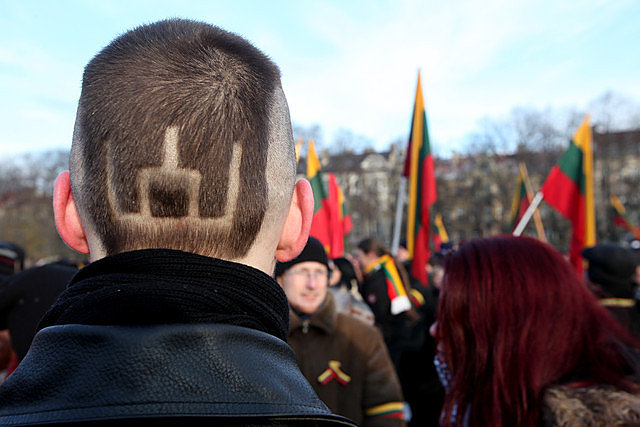
Today everyone goes to the street. Including some radical people. Some, how to say, extremely nationalistic people. And we all know that extremes ain’t that good. So just be aware of that. And please, don’t do these things to a Lithuanian.

6. Lithuania = role model.

The Act of the Re-Establishment of the State of Lithuania served as a model and inspiration to other Soviet republics. However, the issue of independence was not immediately settled and recognition by other countries was not certain.

7. Harder times were about to come.

Mikhail Gorbachev called the Act of Independence illegal and the USSR demanded revocation of the Act and started applying sanctions against Lithuania. If that wasn’t enough, on January 13, 1991 Soviet forces stormed the Parliament building in Vilnius along with the Vilnius TV Tower. Unarmed civilian Lithuanians confronted Soviet soldiers. Fourteen people were killed and seven hundred injured in what became known as January Events.

8. Iceland ♥ Lithuania.

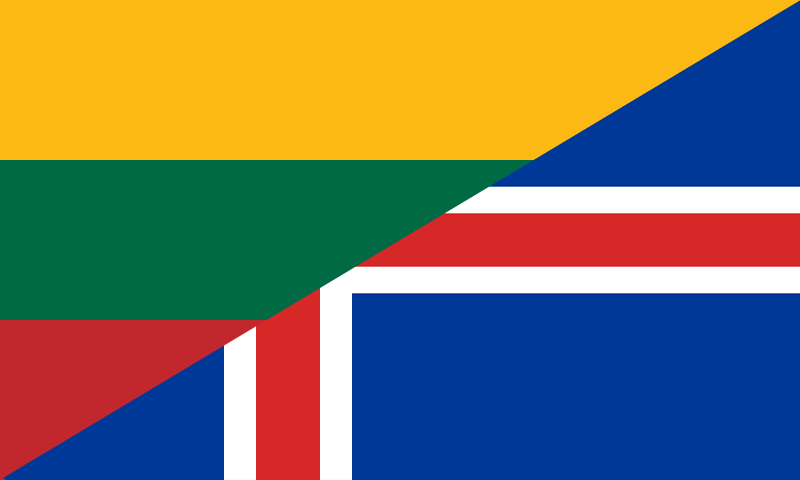
Iceland was the first to recognize Lithuanian independence on February 11, 1991. We ♥ you Iceland!

9. Bye bye URSS!

Finally, on September 6, 1991 Lithuania’s independence was recognized by the Soviet Union.

Su Kovo 11-ąja! Su gimtadienu Lietuva!

MEDTROTTERS

6 things you should know about February the 16th.

1. In Lithuania is a national day.

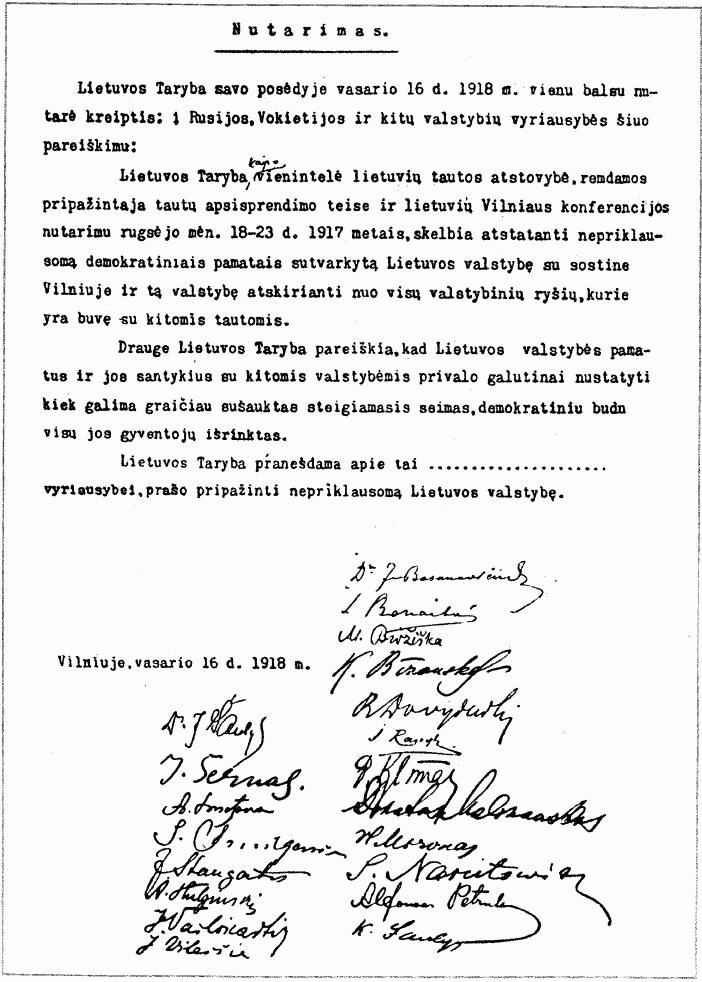
On  this day, Lithuanians commemorate that on February the 16th 1918, the Act of Independence of Lithuania (Lietuvos Valstybės atkūrimo aktas) was signed, thus proclaiming the restoration of an Independent state of Lithuania.

 2. The Act was signed by 20 brave Lithuanians.

This was the Council of Lithuania of 1918. In 1915, Germany occupied western parts of the Russian Empire. After the Russian Revolution in 1917, Germany agreed to allow the Vilnius Conference, hoping that it would proclaim that the Lithuanian nation wanted to detach itself from Russia and establish a closer relationship with Germany. However, this strategy backfired; the conference, held from September 18–22 of 1917, adopted a resolution that an independent Lithuania should be established and that a closer relationship with Germany would be conditional on Germany’s formal recognition of the new state. Here’s a list of all the Signatories.

3. Jonas Basanavičius = the man.

Apart from being the man who was on the 50 litas note, having a kick-ass beard and being a doctor, he was an activist and proponent of Lithuanian National Revival and founder of the first Lithuanian language newspaper Aušra (dawn). Also, he was one of the initiators and the Chairman of the Organizing Committee of the 1905 Great Seimas of Vilnius and the founder and chairman of the Lithuanian Scientific Society (1907)

4. The Act was a powerful one.

… and it was a key element in the foundation of Lithuania’s re-establishment of independence in 1990, and it says something like this(In fact, if only counting from its last independence, Lithuania and I are almost the same age).   

5. After 1918, Kaunas became the temporary capital of Lithuania.

And so it remained from 1919 (after the German occupied Vilnius on January 1st 1919) until 1939. Read more about those years here.

6. February the 16th is the perfect day to go out to the city.

With all the city full of Lithuanian flags, people in the streets many acts and shows going on, February the 16th is definitely a must day to spend in Lithuania. Su Vasario 16-ąja. Su 97-uoju Lietuvos gimtadieniu!


MEDTROTTERS

Finding the light in the darkness.

Carl

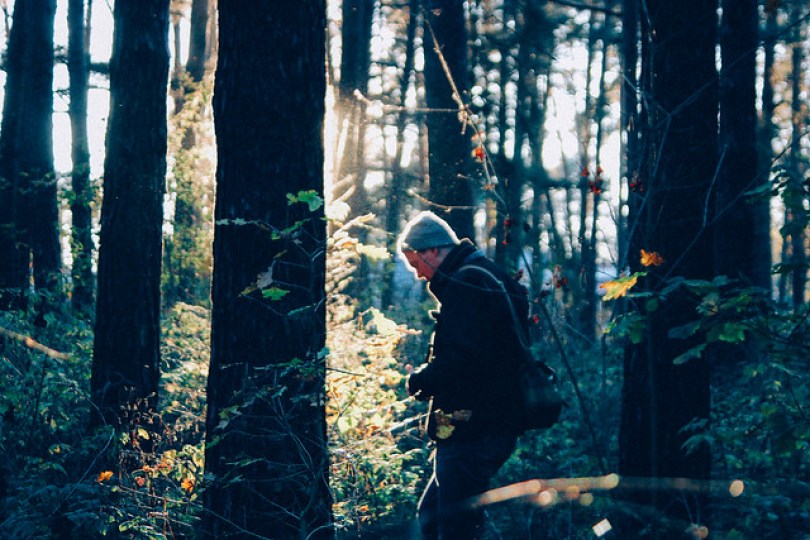
Not so long time ago, my friend Carl and I decided to explore the woods in Kaunas. We are both so much into photography. To tell the truth, he’s such a pro. I feel like every single minute that we spend talking about it I learn more that what I’ve learnt in almost 8 years taking pictures. He’s analogic. I’m digital. I wanted to share with you few of the pictures I took in those couple of days. And also invite you to explore your surroundings. You don’t need to travel far to discover beauty, you just need to change the way you use your eyes. Be eager to give a second chance to the places you’ve already been.

Carl

Carl

Chasing the Light

Carl

Carl

Light through.

We had so much fun in the couple of photo-missions that we did. I can’t really wait for the next one, winter session this time.


MEDTROTTERS

Fateuser Eats: Mint Vinetu (Vilnius, Lithuania)

Mint Vinetu

Mint Vinetu

Mint Vinetu

Mint Vinetu

Mint Vinetu

Mint Vinetu

Mint Vinetu

This is technically not a Fateuser Eats. Mint Vinetu (Vilnius, Lithuania) is a Book Store & Tea Place. I was there in September 2014, the same day I ate in Drama Burger. First of all, I would like to say that the Chai Tea that I had was quite tasty, so it was the coffee that my friend @faufainis had. The place itself is amazing. Very quiet, full of books and a couple of dogs (I wonder if they will still be around) welcoming the new and old customers. It is definitely a recommended chill and relax place. It reminded me (in a way) of when I was in Paris in the Shakespeare and Company library. Plenty of books everywhere. Oh, and also in Mint Vinetu you can listen to a great music selection and grab the books they have there. Tea (or coffee) and books. Such a perfect combo.

Can’t wait to go back there again!

The Final Mark: ✌ ✌ ✌ ✌ ✌ ✌ ✌ ✌  (8/10) fates.


Blog

10 Reasons why I am growing a beard.

DCIM101GOPRO

If I would get one euro every time that I hear that question I would probably have 200 € extra in my account. And well, I think that this is not an easy question to answer actually because it’s a sum of many ideas and reasons:

1. Because it’s a challenge.

I am a very non hairy guy, therefore growing a «proper» beard was such a challenge for me. At the beginning it was super patchy and I looked like a homeless and shaveless dude. Now I just look less like a homeless and more like a person who is really trying hard to grow a beard.

2. Because beards are like boobs.

It’s totally true. The bigger it is the longer the opposite (or same) sex people stare at you. And who doesn’t like to be stared at?

3. Because it is for a great cause.

Now it is November. You probably heard of #Movember (which basically is that you shave completely on the 31st of October and during November you try to grow the biggest moustache that you can) and #NoShaveNovember (what basically means that you don’t shave nor trim your beard for the whole month). We do it to raise awareness for the prostate and testicle cancer, which is one of the major reasons of death in men. Speaking of the devil, I recently started a beardtition (I do love to make words with beard. I meant beard competition) in which I can win beard products and beard stuff. Check my profile here and press on Pabarzdok! (you can press up to three times per day and if you do it I will love you forever and ever).

4. Because bearders gonna beard.

No, really. Don’t you sometimes feel that the more the people tell you that you shouldn’t do something the more you want to do it? At the very beginning not many people supported me with the growing beard project. Now, more friends and relatives support me with this adventure that growing a beard is.

5. Because Ragnar Lodbrok had a beard.

Now probably you wonder who this guy is (unless you are cool and watch Vikings). Well, he was a badass viking that lived in vikingland thousands of years ago. And he had a beard. And he was feared by his enemies. And he had a beard. And he was awesome.

6. Because it feels manly.

Maybe I am a bit too old-fashioned but to me, having a beard and repairing things with your hands it’s a quite well definition of a manly guy. And add beer to the equation plus some muscles and bam! You got the manliest man on earth. Or not.

7. Because Manly Co. are awesome.

About three weeks ago I started collaborating with this awesome dudes. They have the first Lithuanian beard oil made in Lithuania. Plus they are bearded. Plus they let you smell all the scents and they will meet you personally to tell you how to use them according to your facial hair. And man, after using their oils and conditioners for 3 weeks my beard is shinier and stronger than ever.

8. Because «dude, you’ve got something on your beard».

And then I picture myself as an ancient viking with my beard full of blood after fighting the scariest and most brutal battle ever. But then I realize it’s only a piece of chip. But still, feels great.

9. Because you get to touch other guys beards and it ain’t weird.

Like women always talk about their haircuts or their nails, guys we don’t compliment on «how cool your hair looks today». It just would feel weird. But with the beards, that’s a whole new world. You can even ask about what products you use, or what barbershop you go to, and EVEN TOUCH EACH OTHERS BEARD. Nice.

10. Because I can’t wait for winter.

I think I have something for nordic culture. Probably because it is exotic to me. Or maybe because I can tolerate cold better. I’ve been living in a Baltic-Nordic country for 4 years, and whenever the snow comes and mega cold with it, it sort of makes me happy. Let’s say that in Lithuanian the 4 seasons are well defined. Warm summers and damn cold winters. And I can’t wait to see my beard full of snow flakes. And to see if it will really keep me warm.